
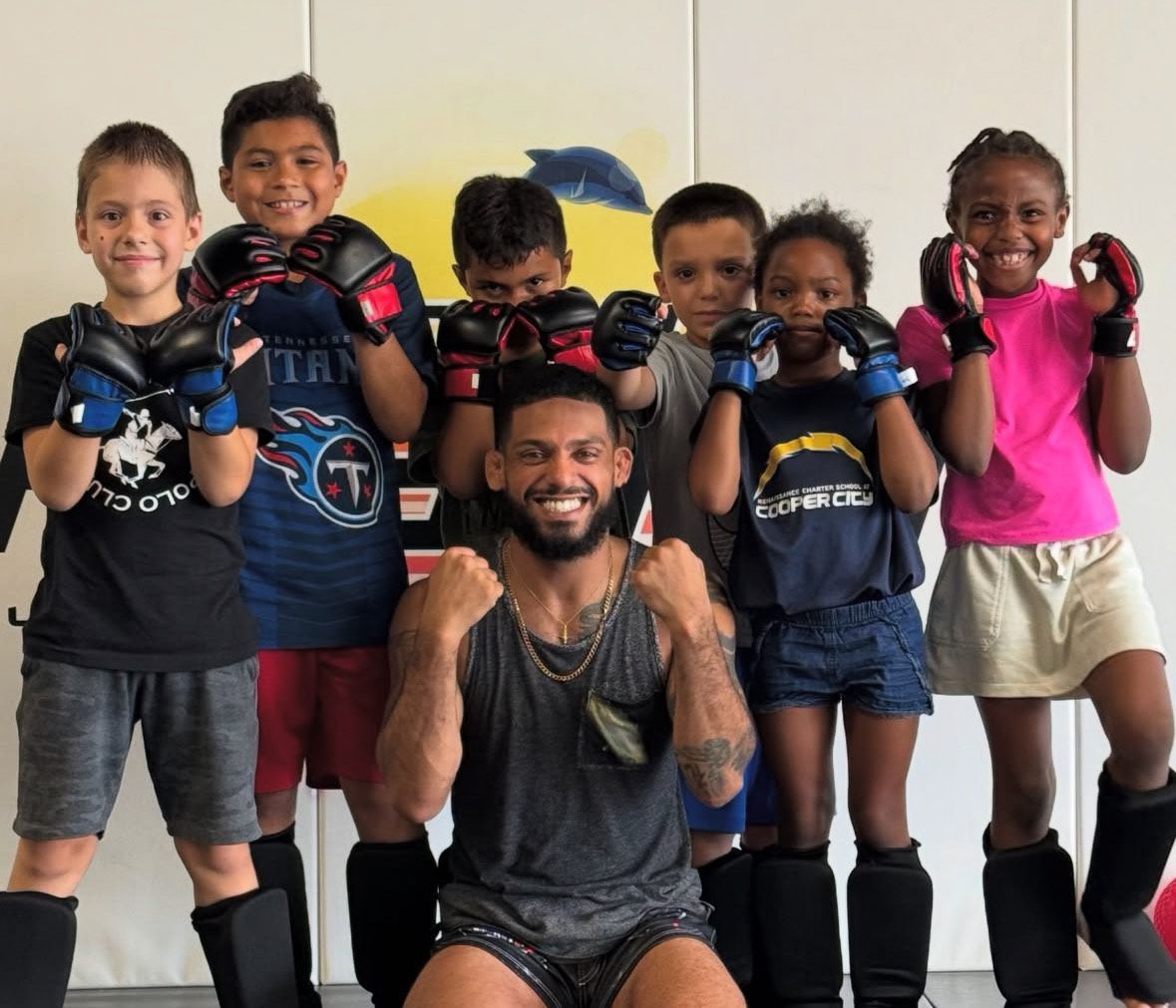
Youth Jiu-Jitsu gives kids a place to move, learn, and belong, all at the same time.
If you are looking at Youth Jiu-Jitsu for your child, you are probably balancing a few goals at once: you want an activity that is safe, structured, and genuinely good for your kid’s body and mindset. You also want something your child will actually enjoy, not just tolerate for a few weeks.
In our Youth Jiu-Jitsu program, we see the same pattern again and again: when kids have clear expectations, patient coaching, and the right training partners, discipline starts to look less like “being strict” and more like learning how to handle real life. And in a family-focused community like Miramar, that combination of structure and friendship is a big reason parents search for Youth Jiu-Jitsu in Miramar.
Why Youth Jiu-Jitsu works especially well for kids
Youth Jiu-Jitsu is often described as a low-impact martial art for children because the focus is on grappling, control, and technique rather than striking. That matters to parents, and it matters to kids too. When the goal is control and awareness, not hitting, children can practice with intensity while still learning to keep each other safe.
The interesting part is that the physical benefits and the life skills tend to grow together. Kids learn how to move their bodies with coordination and balance, and at the same time, they learn to listen, wait their turn, and reset after mistakes. Those are “mat skills,” sure, but they also show up at school, at home, and in social situations.
Research summaries parents often run into echo what we see on the mats: martial arts training has been linked with improvements in fitness markers like agility, strength, flexibility, coordination, and balance in children. Another cited summary specifically notes that kids training Brazilian Jiu-Jitsu for six months improved core strength, balance, and cardiovascular health compared with sedentary peers. In other words, this is not just an “energy outlet,” it can be real physical development.
What your child actually learns in class (and why it builds discipline)
When parents hear “discipline,” it can sound vague. We prefer to make it concrete, because you can see it, and your child can feel it. Discipline in Youth Jiu-Jitsu is built through small, repeated choices: paying attention for one more minute, trying again after getting stuck, and being respectful during partner drills.
The habits that create discipline over time
A typical class structure gives kids a steady rhythm. The routine matters, because kids start to predict what is expected, and that predictability helps them stay calm and focused. Over time, that shows up as:
• Listening the first time because instruction affects safety and success
• Following steps in a technique instead of improvising wildly
• Practicing patience during partner drills and line rotations
• Learning emotional regulation when a move does not work right away
• Taking responsibility for personal space, posture, and effort
That last one surprises some parents. Youth Jiu-Jitsu is physical, but it is also thoughtful. Kids learn that good choices lead to better outcomes, and that effort is something they can control even when they cannot control everything else.
Friendship skills: why partner training makes social growth feel natural
A big gap in most “kids martial arts” conversations is friendship. Parents ask about confidence and bullying, but fewer people talk about how children learn to connect with others through respectful contact and shared problem-solving.
Youth Jiu-Jitsu is built around partner work. That means your child practices with many different personalities, body types, and learning styles. It is not the same as free play, and it is not the same as a team sport either. The mat is a social environment with boundaries, which is exactly what many kids need.
How friendships form on the mat
In class, kids pair up, drill, switch partners, and learn to communicate. Over time, friendships tend to grow from a few specific experiences:
• Shared goals: learning the same techniques and celebrating progress together
• Turn-taking: switching roles so each partner gets to practice fairly
• Safe challenge: pushing each other without trying to “win” every moment
• Respectful touch and space: learning consent, boundaries, and control
• Repair after conflict: resetting quickly after a rough round or a misunderstanding
Those are real social skills. And because they are practiced repeatedly in a structured setting, they often stick.
Safety and supervision: what “safe martial arts for kids” should mean
It is normal to wonder, “Will my child get hurt?” Any physical activity has risk, but Youth Jiu-Jitsu can be taught in a way that prioritizes control, age-appropriate technique, and close supervision.
One reason parents look at Jiu-Jitsu in Miramar, FL as an option is the no-striking emphasis. Instead of punches and kicks, kids focus on grappling fundamentals: positioning, balance, movement, and controlled holds. We also spend time on how to train safely, because safety is a skill, not an assumption.
What we do to keep training age-appropriate
Safety is not a single rule, it is a system. In our youth classes, that system includes:
1. Clear mat rules that kids repeat until it becomes habit
2. Partner matching based on age, size, and experience when it matters
3. Technique progressions that start slow before adding resistance
4. Frequent coaching reminders about control, tapping, and awareness
5. A class structure that keeps kids engaged instead of chaotic
If your child is brand new, that is okay. Beginners are not thrown into situations they cannot handle. We teach fundamentals first, and we build confidence step by step.
Confidence, anti-bullying skills, and calmer decision-making
Parents often ask whether Youth Jiu-Jitsu helps with bullying. We think the best answer is practical: it helps children feel less helpless. That can change how they carry themselves, how they respond to pressure, and how quickly they can ask for help instead of freezing.
This is not about teaching aggression. If anything, the training environment rewards calm thinking. Kids learn that panic makes situations worse, while breathing, posture, and technique make situations manageable. Many sources also connect BJJ training with improved resilience, conflict resolution, and social confidence, which lines up with what we see in day-to-day progress.
Confidence also shows up in small moments. A child who used to avoid eye contact may start greeting partners. A kid who struggled with frustration may learn to pause, reset, and try again. Those are not flashy wins, but parents notice them.
Why Miramar families like a year-round indoor program
Miramar is full of busy family schedules: school mornings, homework, after-school pickups, and the reality that screen time can creep in fast. And in South Florida, weather can be unpredictable. Even kids who love the outdoors can get stuck inside for weeks at a time between heat, storms, and rainy stretches.
Youth Jiu-Jitsu in Miramar fits well because it is an indoor, year-round activity that still feels physical and social. Your child gets structured movement, face-to-face interaction, and a routine that does not depend on the weather cooperating.
It also works as a steady after-school anchor. When kids have one or two consistent training days each week, the week feels more organized. That is something we hear from parents all the time: training days become the days when homework gets finished a little faster because there is a clear plan.
What the first week looks like for beginners
The first week should feel welcoming, not overwhelming. We keep onboarding simple and supportive because most kids are not worried about technique at first. They are worried about fitting in.
In a beginner’s first classes, we focus on a few basics: how to line up, how to listen for cues, how to move safely on the mats, and how to work with a partner. The techniques are introduced in a way that makes sense for new students, and we give lots of reminders so kids do not feel put on the spot.
What to bring and what to wear
You do not need to overthink this. For the first class, comfortable athletic clothing is usually enough, and we will let you know what uniform or gear is recommended as your child continues. Bring water, show up a little early, and plan to stay nearby so your child can settle in without rushing.
If your child is shy, we help with that. If your child is full of energy, we help with that too. Youth Jiu-Jitsu is one of those rare activities that can serve both personalities, because the structure stays the same even when kids are different.
How often should kids train each week?
Most families start with one to two classes per week, then adjust based on how your child feels and what your schedule can realistically support. Consistency matters more than intensity. One great class every week beats a burst of training followed by a month off.
If your child loves it, adding a second day usually helps skills click faster. If your child is still adapting, one day a week can be a perfect way to build comfort and routine without pressure.
Youth Jiu-Jitsu in Miramar: quick answers for parents
What age can my child start Jiu-Jitsu?
Age varies by readiness and class groupings, but many kids can start once they can follow basic directions, participate safely, and handle structured partner drills. Our class schedule shows current youth options.
Is Jiu-Jitsu safe for kids?
Youth Jiu-Jitsu is commonly positioned as safer than striking arts because it emphasizes control and technique. Safety also depends on supervision, structure, and age-appropriate training, which we treat as essential.
Will my child get hurt?
Minor bumps can happen in any sport, but we reduce risk through controlled drilling, clear rules, and progressive training. Kids are taught to tap, communicate, and prioritize control.
Does Jiu-Jitsu help with bullying?
It can help kids feel more confident, practice calm decision-making, and develop practical self-defense awareness. We also reinforce respect, boundaries, and conflict de-escalation.
Will Jiu-Jitsu help a shy or hyperactive child?
Often, yes. Shy kids get a structured way to connect. High-energy kids get a positive outlet with clear expectations. Both benefit from routine and coaching.
Take the Next Step
If you want an activity that builds fitness and real-life character, Youth Jiu-Jitsu checks a lot of boxes: discipline that is practiced, not preached, and friendship skills that grow naturally through partner training. In Miramar, having a structured indoor program can also make the week feel smoother for the whole family.
When you are ready, we would love to help your child get started in a way that feels comfortable and age-appropriate. At 10th Planet Jiu-Jitsu Miami, our youth program is built around safe fundamentals, steady progress, and a team atmosphere where kids learn together.
Take your martial arts training further by developing your grappling and submission skills at 10th Planet Jiu-Jitsu Miami.